
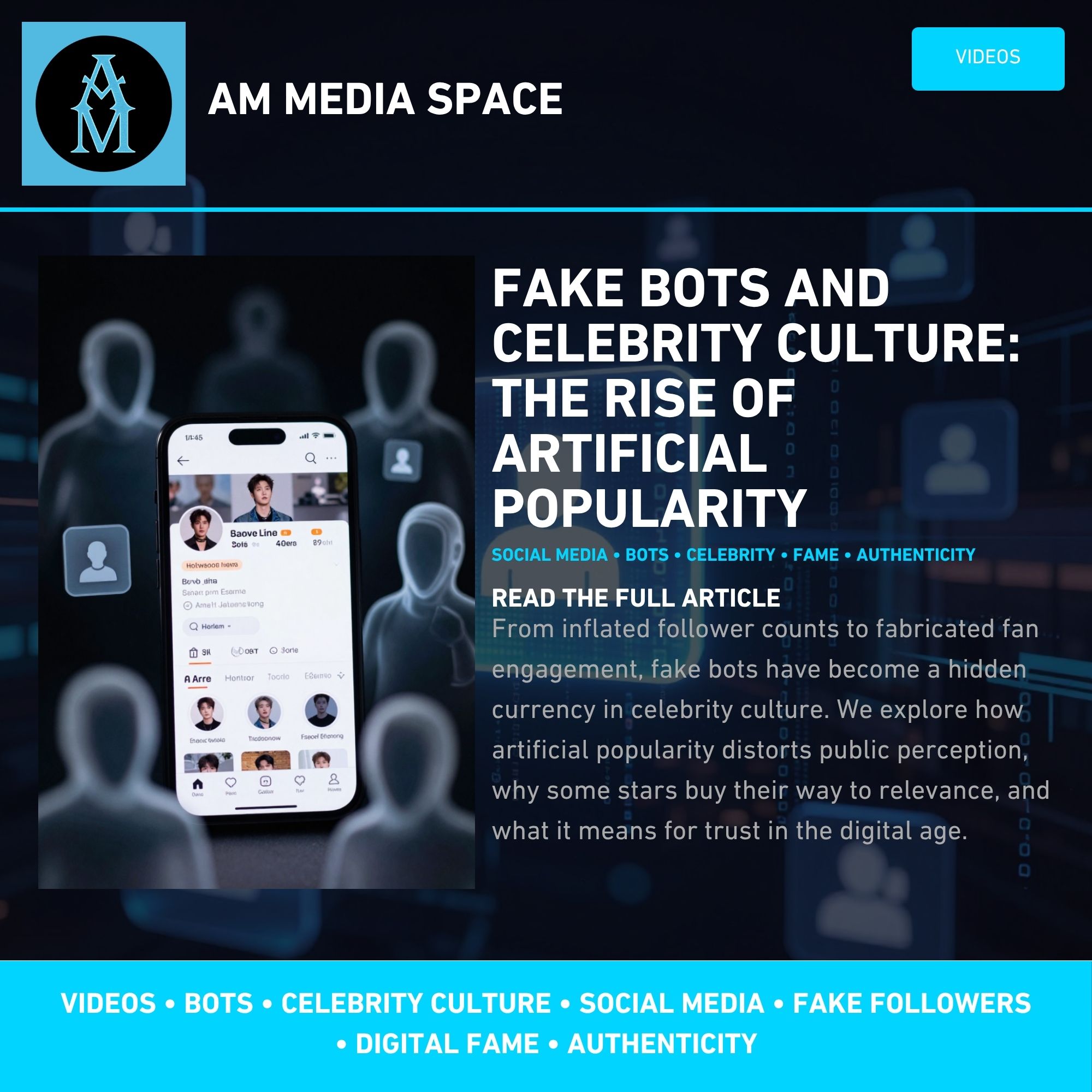
Fake Bots and Celebrity Culture: The Growing Challenge of Artificial Popularity
In the age of social media, popularity is often measured in numbers. Followers, likes, shares, comments and views can influence how the public perceives celebrities, influencers and brands. However, alongside genuine fan engagement, a growing concern has emerged: the use of fake bots and artificial engagement to create the illusion of popularity.
Fake bots are automated accounts programmed to perform actions such as following profiles, liking posts, leaving comments or viewing videos. Some are designed simply to spread spam, while others are used to artificially boost engagement metrics. These automated activities can make an account appear far more popular than it actually is.
The entertainment industry has become increasingly dependent on digital visibility. Record labels, film studios, brands and publicists often monitor social media statistics when assessing the reach of a celebrity or influencer. As a result, there is significant pressure to maintain high engagement figures, creating an environment where artificial activity has become a concern across the industry.
Research by social media analytics companies has shown that fake followers and bot activity exist on many platforms. In some cases, individuals or organisations purchase followers, likes or views from third-party services in an attempt to increase their online profile. It is important to note, however, that inflated engagement does not necessarily mean a celebrity has knowingly bought fake activity. Automated bots can also follow or interact with accounts without the owner's involvement.
Social media platforms have invested heavily in identifying and removing fake accounts. Companies such as Instagram, TikTok, YouTube and X regularly suspend bot networks and delete millions of inauthentic accounts that violate their terms of service. These efforts are intended to improve the accuracy of engagement metrics and create a fairer experience for users.
Artificial engagement can have consequences beyond social media. Brands may make marketing decisions based on inflated audience figures, advertisers may spend money reaching audiences that do not exist, and genuine creators can find themselves competing against accounts whose popularity has been artificially enhanced. This has led to increased calls for greater transparency and stronger detection systems.
At the same time, not every large account with unusual engagement should be viewed with suspicion. Viral content, media coverage, global events and coordinated fan communities can all generate dramatic increases in views and interactions without any manipulation. Careful analysis is therefore essential before drawing conclusions about an individual's online presence.
Experts recommend looking beyond simple follower counts when assessing influence. Factors such as meaningful comments, audience retention, consistent engagement and authentic community interaction often provide a more accurate picture of genuine popularity than raw numbers alone.
As technology continues to evolve, so too will the methods used to detect and combat artificial engagement. The challenge for social media platforms, advertisers and audiences alike is to distinguish authentic influence from manufactured popularity while ensuring that success online is measured by genuine connection rather than automated clicks.
Comments