
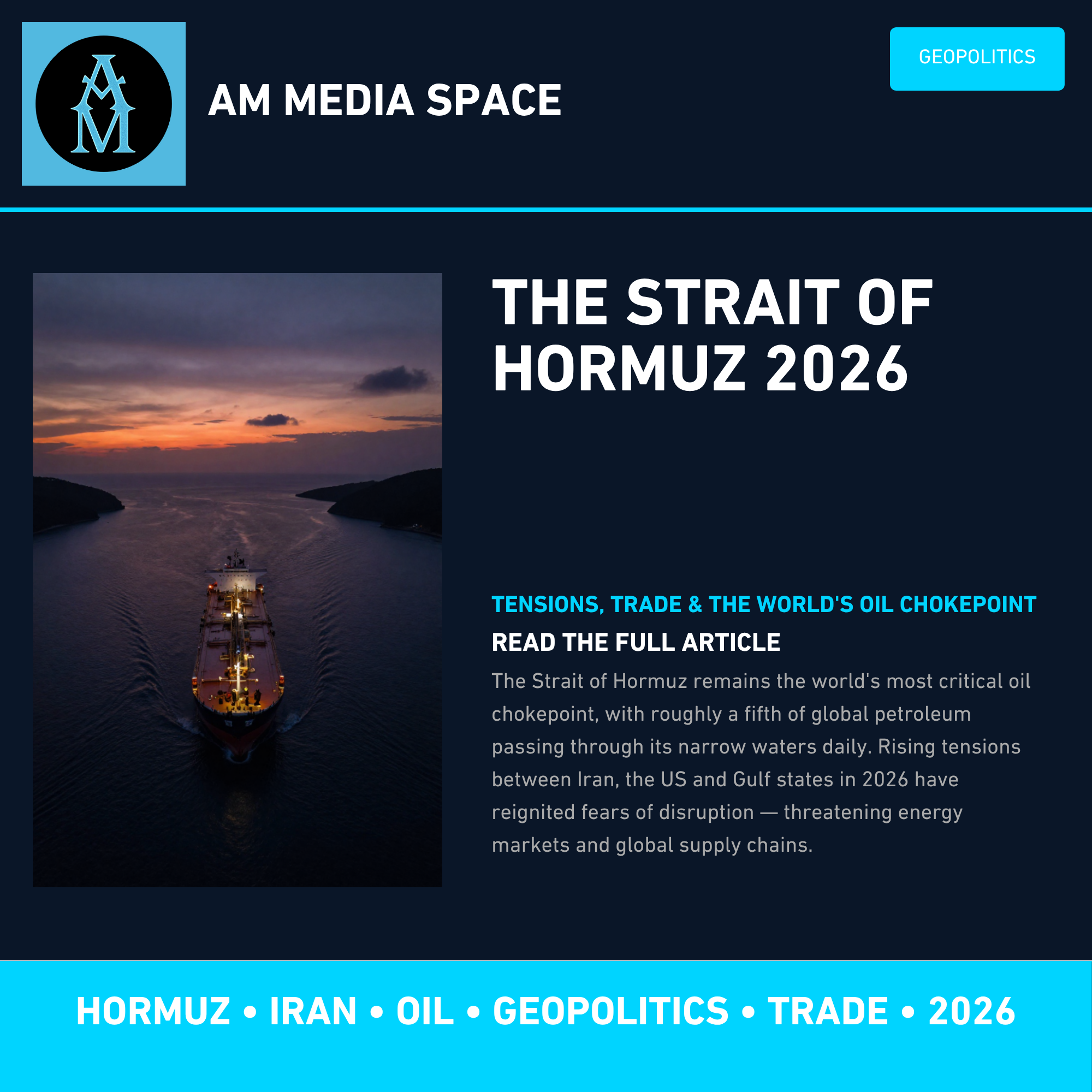
The Strait of Hormuz: Why the World's Most Important Shipping Route Remains Under Pressure
Summary
The Strait of Hormuz is one of the world's most strategically important waterways, carrying a significant proportion of global oil and gas supplies between the Persian Gulf and international markets. Whenever tensions rise in the Middle East, the narrow shipping lane quickly becomes a focal point for global concern. Repeated threats to close or restrict access to the strait have highlighted its importance to international trade, energy security and geopolitical stability.
The World's Energy Chokepoint
The Strait of Hormuz is a narrow stretch of water located between Iran to the north and Oman to the south. It serves as the only sea route connecting the Persian Gulf to the wider Indian Ocean, making it one of the most vital maritime passages on the planet.
Every day, millions of barrels of oil and large quantities of liquefied natural gas pass through the strait. Energy exports from countries such as Saudi Arabia, Iraq, Kuwait, Qatar and the United Arab Emirates depend heavily on access to this route.
Because so much of the world's energy supply travels through a relatively small waterway, the Strait of Hormuz is often described as a global "chokepoint" — a location where disruption can have immediate international consequences.
Why Does Closure Keep Being Threatened?
The question that repeatedly emerges during periods of regional tension is simple: why is the Strait of Hormuz continually discussed as being opened, restricted or potentially closed?
The answer lies in geopolitics.
Iran has historically viewed the strait as one of its strongest strategic assets. During disputes involving sanctions, military activity, regional conflicts or diplomatic pressure from Western nations, Iranian officials have periodically suggested that shipping through the waterway could be restricted.
In many cases, these statements are intended as political signals rather than immediate operational plans. By raising the possibility of disruption, Iran can draw international attention to wider disputes and remind global markets of the strategic leverage it possesses.
However, the reality is more complex. A complete closure of the Strait of Hormuz would also impact Iran's own economy and trade interests. As a result, many analysts believe that threats of closure often serve as a form of diplomatic pressure rather than a long-term strategy.
Why Markets React So Strongly
Financial markets pay close attention to developments in the Gulf because uncertainty alone can affect prices.
Even rumours of disruption can lead to:
- Rising oil prices.
- Increased shipping insurance costs.
- Higher transportation expenses.
- Pressure on global inflation.
- Concerns about energy security.
Modern economies remain heavily dependent on stable energy supplies, meaning that any perceived threat to a major shipping route can quickly ripple through global markets.
Military and Security Concerns
The Strait of Hormuz is also one of the most heavily monitored waterways in the world.
Naval forces from multiple countries maintain a presence in and around the region to ensure freedom of navigation and protect commercial shipping. The United States, United Kingdom and several allied nations regularly coordinate maritime security operations in the Gulf.
Any confrontation involving commercial vessels, military patrols or regional powers has the potential to escalate tensions and attract international attention.
Because of this, policymakers often describe the strait not only as an economic asset but also as a critical security concern.
What Would Happen If It Closed?
A prolonged closure would create significant challenges for global energy markets.
While some oil-exporting nations have developed alternative pipelines and export routes, these systems cannot fully replace the volume of energy that normally passes through the strait.
Potential consequences could include:
- Sharp increases in global oil prices.
- Higher fuel costs for consumers.
- Increased pressure on manufacturing and transport sectors.
- Rising inflation in many economies.
- Greater geopolitical instability.
For countries such as the United Kingdom, the impact would likely be indirect but still significant, as energy prices are determined by global markets rather than local supply alone.
Looking Ahead
The Strait of Hormuz remains one of the world's most important strategic locations. Its importance extends far beyond the Middle East, influencing energy markets, international diplomacy and global security.
While complete closure remains unlikely, recurring tensions demonstrate how a relatively narrow stretch of water can affect economies and governments around the world.
As geopolitical rivalries continue to evolve, the Strait of Hormuz is likely to remain at the centre of international discussions about energy security, military strategy and global stability for years to come.
This article forms part of an ongoing AM Media analysis series examining the world's critical strategic and economic flashpoints.
Comments